Showing posts with label Kyoto. Show all posts

Monday, June 27, 2011

Kyoto

On Another Day without Yakyu

Kyoto
The city from Eikando
Monday, June 27, 2011
Kyoto, Japan


Outside of the Game:
It was another early travel day, but with nearly a solid eight of sleep in front of it, it was not nearly as bad as previous days had been. In the early morning of Fukuoka, I got all my belongings together again, and then headed out for the rail station down the street.

I arrived particularly early for the train, and after brief thoughts of getting a ticket for an earlier train, I settled in for some serious waiting about. At this early hour, all of the station kiosks were not open yet, but I found one to buy some breakfast. It was then that I found out that they sell tiny little bottles of whiskey in the train station bodegas. I have no idea how I went so long without knowing this information, but it struck me as important at the time. I didn't buy one just then because it was on the pricey side and I didn't want to indulge until I was sure my money situation was worked out, but it was carefully noted for later.

My train eventually came on time, as they all seemed to do. This one was a little bit nicer than the “average” bullet train, with fancier seats. I'm not entirely sure what the significance is, but it didn't cost any more than normal, and it made my nap a little nicer. I spent the trip working my scorecard from the previous night's game and getting up-to-date with this thing, which I will achieve right when we get to the period at the end of this sentence here.

On the second leg of the train trip from Fukuoka to Kyoto, I was sitting next to a salaryman on his way to Tokyo who spoke some English. He asked if I was American, and then asked why I was in Japan. I explained what I was doing and braced for the inevitable. Instead, he asked if I was “sort of” a big baseball fan. Sort of? In Japanese eyes, this insanity I was perpetrating was something a “sort of” big baseball fan would do. I absolutely shuddered to think what an actual big baseball fan does for his kicks around these parts.

After I got the station, I immediately went to the nearest Post Office ATM, and successfully retrieved 20,000 yen from my account. With that bit of business behind me, it was a much easier walk to the ryoken.

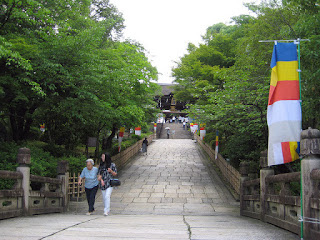
After dropping off my bags, I decided to set out to see the world again. I began by going to the Higashi-Honganji Temple right across the street from the ryoken. It was undergoing renovation, so I made a quick pass to see the dragon-head fountain before heading off to the subway station.

Higashi-Honganji Temple
My favorite fountain

The problem, such as it is, with Kyoto is that you could spend a month there, and while you would continue to be greeted by treasures each greater than the last, you still wouldn't have time to see everything the city had to offer. On my previous visit I went into the heart of the tourist district, so I decided to head further north this trip through, and hit an area called the “Philosopher's Path,” which crossed several important cultural landmarks along its route.

I got to the subway stop near what one map identified as the start of the path, and upon getting to an exit, I was trying to orient myself to find out the right way to go. I was approached by a Japanese geek who offered to help. I don't mean it pejoratively; I mean to identify him as one of my own.

He almost immediately recognized my problem. He told me to ignore the fact that one exit was seemingly much closer to where I wanted to go than the other. He said in all cases, follow what the signs say and not what the map implies. And I was less than surprised when he turned out be correct, as the exit indicated by the sign dropped me exactly where I needed to be.

With an endless string of cultural delights waiting, I just decided to follow the path and go into every temple and shrine along the way until I ran out of day. The first stop was Konchi-In, which started me off on a state of mind completely divorced from mundane matters and transfixed on natural beauty and ancient buildings whose wood and tatami had a smell that was nearly a tangible thing. By the time I wandered on to Nanzen-Ji, I was somewhere else entirely.

Nanzen-Ji
Garden at Nanzen-Ji

When confronted with the Zen garden at Nanzen-Ji, I just sat down and watched it, which predicated an interesting event. After sitting down, I glanced at my watch and saw a half hour had passed. And I actually thought the following to myself: “Holy crap: that is tranquil.” This is why we can’t have nice things.

Elsewhere in the temple complex, I scrambled up an aqueduct that had no safety railing to prevent you from plummeting to an unappealing death, yet was curiously unaffected. Walking on an ancient brick edifice with flowing water next to you has quite a calming effect.

Nanzen-Ji
Safety railings aren't tranquil

Emerging out into a late-growing afternoon, I found a tourist café nearby and had the best turkey sandwich of my life as I sat in the air conditioning, drinking water and realizing that perhaps there is a thinner line than thought between heat exhaustion and spiritual enlightenment. Suitably refreshed, I set out again along the temple path. I ended up going through Tenjuan and Eikando, climbing up the latter’s mountainside pagoda to look down on the world, having a run-in with the loudest tiny frog in the world, and spending another indeterminate amount of time looking at the sand in another dry Zen garden.

As it turns out, what I thought was the start of the Philosopher’s Path wasn’t actually the Philosopher’s Path at all, and I’m sure there’s something wise to pull out of the whole situation, but I chose not to. Once on the actual path, I followed the winding trail along the canal it followed, trying desperately not to get caught up in any metaphors. As part of the path was closed for repairs involving an annoying detour, and a mooning couple blocked the way with their oblivious slow walking, I failed utterly to do so, and silently cursed the fact that even silently cursing on the Philosopher's Path was somehow speaking volumes about my state of enlightenment or lack thereof.

At the northern end of the path was Ginkakuji Temple, and I had just about one cultural treasure left in me for the day. The “Silver Temple” included an audio tour available in English, so I had a little more than the usual English pamphlet to help me understand what was happening on the grounds beyond the insane tranquil beauty of it all. The Zen sand sculpture was apparently meant to represent the water reflecting the moon at night, and once again, I just found myself wandering slack-jawed through the whole proceeding wondering how anyone who lived here could do anything but pacifically wander the grounds of these temples every damn day. Having climbed and wandered every last inch of the place, I decided to heed the barking of my aching dogs and head back downtown.

Ginkakuki Temple
Tending the garden

Although apprehensive about the whole idea of bus travel, the last temple was located right at the terminus of one of Kyoto's bus lines, and it was not only the easiest way back to the city, it was also probably my only shot to get back to downtown before the washi paper store I wanted to visit again had closed. And although bus travel is inherently flawed, I'm willing to try anything once, and the Japanese organization hadn't really let me down yet.

Kyoto bus
A non-awful bus

I got on the next flat-fee bus, and tried to follow along with the stops on my map. Twenty minutes later and with no incidents more than increased street traffic the closer we got to downtown, I had arrived at my stop with time to spare.
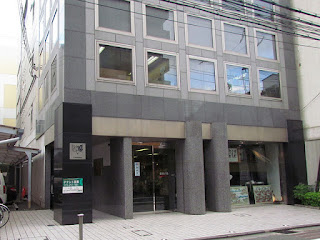
Morita Washi
Morita Washi

After all of the flailing around last year, it was a relatively easy thing to find Morita Washi this time. I did some enthusiastic shopping for affordable gifts with small luggage footprints, and then walked back down to the ryoken.

After an extremely necessary soak to relieve feet ground to chop meat, I got dressed to go out to dinner. It was approaching the halfway point of my trip, so I was getting to that dangerous tipping point in the zombie movie when zombies start to outnumber living people, or in this case, dirty clothes start to outnumber the clean. All of my overshirts were either wrinkled or skunked through, so I put one of the cleanest, wrinkliest one through the drier, and then I realized what I was doing: I was trying to look presentable for the meat.

Because this was the dinner I had been looking forward to for almost exactly a year now: the kobe restaurant at the top of Kyoto Station. There are those who are of a school of thought that a particularly good or transcendent experience should not be repeated because it can never live up to the original and is thus a guaranteed disappointment. And to those people I ask: How is life without orgasms? I mean, you already had one, so repeating the experience is pointless, right? Been there, done that.

Dinner
Foreplay

Needless to say, the experience again failed to disappoint. I think I may have even sat in the same seat as last time. If I recall correctly, I ordered the second most expensive cut last time, and that was surpassed this time by the immediate ordering of the top meat. Although I had done this before, it was still a glorious thing. As with a lot of the experiences this time in Japan, the lack of complete novelty did not in any way diminish the experience of having a stately kimono-wearing woman grill up some of the best beef in the universe at my table. And knowing what exactly was coming allowed me to pace myself much better this time, and remember to take more pictures, and given my previous analogy, this is all getting disturbing.

Nevertheless, it was worth every last cent, and I am now not sure I can go more than a year without having it again. I am not one to speculate on what withdrawal symptoms may be like for removing oneself from evidence of a beneficent divinity, but I assuredly and whole-heartedly hope to never find out.

Dinner
The main event

In my post-meat bliss, I wandered around the station roof, watching couples stare out lovingly to themselves and the skyline and smugly knowing for absolutely certain in my heart that they had no idea what true love and happiness was unless they went to dinner downstairs.
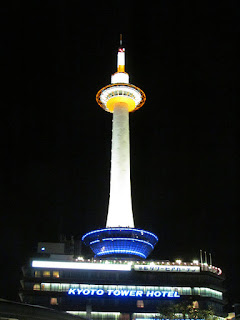
Kyoto Tower
Kyoto by night

I went back to the ryoken for some deserved rest with a stomach full of joy and feet that were in the drafting stages of a resolution to divorce from my person.


The Accommodations:
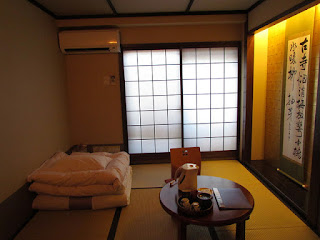
Matsubaya Inn
Matsubata Inn

I once again stayed at the Matsubaya Inn ryoken, a traditional Japanese inn a short walk from the station. While last year I stayed in a cheaper shared-bathroom room, I was able to get a suite room for the same price this time. It had a bathing area as well as a toilet in the room itself, as well as a larger room that came with a traditional ceremonial alcove, a small table and chairs, and a small balcony looking out into back-alley Kyoto.

When checking in, I was immediately recognized from last year by the owner.

“Off day for yakyuu?” he asked.

It's fame of a sort.


2011 Japan

Monday, June 28, 2010

Kyoto

On a Day without Yakyu

Kyoto
View down to the city from a temple
Monday, June 28, 2010
Kyoto, Japan


Outside the Game:
Kyoto is a quick bullet train ride from Nagoya, and I actually got up promptly enough to catch an earlier train than the one I intended. One of the advantages of traveling to visit things at 2 and 6 in the afternoon is that you generally aren't traveling during peak commuting periods. This was not the case today, as I was making an early start of it to get the most of my day in Kyoto, which just happened to be Monday rush hour.

Nagoya Station
Salaryman Parade

And it put into focus a reality about life in Japan. 99.99% of it is lived with a strict "no touching" rule. You bow instead of shaking hands. You wave instead of hugging. Financial transactions are facilitated by special bowls where you place your money and the cashier places your change, all to prevent the horrors of inter-human contact. And then, outside of whatever the Japanese do behind closed doors, there is subway. Now, while the exaggerated urban legend of subway conductors wedging in as many people as possible to trains so the doors can close may not make the mark, it is not all that far from reality, as during rush hour, every last inch of space in a subway car is efficiently taken up by human flesh, and you find yourself ever so politely wedged into the person's back in front of you. Being a couple inches taller than the average citizen in this case provides some strategic advantages, to be sure. Even still, I got to the station in plenty of time for the train and killed some time watching a fastidious elderly technician fill one of the innumerable drinks machines on the track with eminent care.

The bullet train was uneventful, dumping me at Kyoto Station. In what would be a good indicator of the rest of my navigation experiences in the city, I immediately went the wrong way, and ended up exiting the station at the exact opposite end at which I needed. Some quick "sumimasen" and map pointing later, I was on my way to the correct exit, and my traditional ryokan inn. It being early morning, I just dropped off my bags and headed out into the city after buying a one-day unlimited commuter pass from the helpful hotel staff.

Not having any particular goal for today, I started by visiting the first temple complex that availed itself, which was nearly next door to my ryokan, Hijashi-Honganji. The "problem" (if it can be called that) with Kyoto is the same affliction affecting Rome and certain other areas of Europe: there are so many wonders piled into such a small area that individual items that taken in isolation would be a masterpiece just becomes part of the background of the utterly epic other works around them. And in the "city of temples," it can blur quickly with the insane density of the treasures.

Higashi-Honganji Temple
Dragon fountain
And in Kyoto, nearly everything is wedged in by design or necessity. The non-main roadways that dump out into the major thoroughfares, for example, are narrow slots barely large enough to allow a car to pass, yet through some inherent social bargaining both human and vehicular traffic both manage to utilize.

It is also one of the only cities that wasn't extensively remodeled by the US in the 40s. In England, the most common phrase you hear in relation to historical buildings is "Henry VIII" (as in "... before it was destroyed by Henry VIII"), and in Ireland, it is "rebel leaders" (as in "... where the rebel leaders were held/executed"). In Japan, that phrase is "bombing during World War II" (as in "The city was completely destroyed by bombing during World War II."). Kyoto was one of the few cities to escape that phrase, and unlike Hiroshima and Nagasaki, they didn't get to pay for it in a big way at the end of the war (although Kyoto was on the short list to get the "special greeting" from Uncle Sam, before being removed at the insistence of Secretary of War Stimson). War is war, which is unfortunate, and the Japanese expansionist imperial regime brought that war on themselves, but despite all that, it is comforting to know that at least one city in the country avoided utter destruction.

There was a suggested one-day tour for Kyoto, and since I had one day to spend and not a great depth of knowledge on the place, I decided to follow it, more or less. It brought me down to the main temple district in the south east of the city, hitting the main sites of Kiyomizu-dera. As fate (or any of the involved gods) would have it, it had been overcast and drizzly all morning, but as soon as I got to the wide and unshaded confines of the temple area, the sun came out in force and seemingly vaporized all the clouds in the sky. Thankfully, one of the first things I ran into at the first temple complex was a Buddhist devotional exercise that was underground in darkness, the Tainai-meguri. You follow prayer beads along the wall in the darkness in an attempt to gain some insight through the sensory deprivation. Not only was it out of the sun, but it was quite a unique and tranquil experience, until some other Americans entered behind me and the children started complaining loudly that it was dark down there. So it goes.

Nishi-Otani
Nishi-Otani

The temples were just striking, and even in the scorching sun, it was hard not to get lost in the tranquility of the surroundings. After going through the temple complexes themselves (and wading through the sea of tourists that were heading up to the temples by mid-afternoon), there were several historic side streets full of tea gardens and shops (and more temples) that I wandered through for most of the early afternoon.

Kyoto Streets
Crowded streets

Completing as much of the temple circuit as I could, I headed back to downtown proper to try and find a washi store I read about. Washi is traditional Japanese paper, and I figured I had to at least take a look. However, the directions in the book I had were not exactly specific, and we had already established my complete inability to navigate the city well. A half-hour search that got increasingly desperate followed. I eventually asked at one of the countless police kiosks, and the officer was able to direct me to the one alleyway in the area that I had not explored to get to the store. Some good did come from wandering around all the sideways and alleyways south of the main drag in town, as I got a glimpse of real-life geisha. There are plenty of tourist geisha that wander those districts of the city, but the geisha proper don't go out in public much, as tourists have a tendency to be rude to them, and apparently their enthusiasm includes physical contact and near assault on their persons. She seemed suitably circumspect of an American wandering down the same small roadway as her, so I gave her as much room as the narrow confines would allow and tried to look as non-threatening as possible, which was probably not that effective given how haggard I was at that point in the day.

Geisha
A fleeting glimpse

After that much searching, I went to town once I got inside the store. Paper, notebooks, decorative items, even coasters all went into my bag. And particularly surprising was that everything I bought ended up being under $50, which nearly prompted another rush of purchases, only restrained by my limited and dwindling luggage space.  After getting all my wonderful washi packed up, I decided I has a little more tourist left in me. I took the subway up to the Imperial Park and wandered around for a while. I made the poor choice of going out the main passage exit, just as the sun managed to make one last attempt to burn me to ash.

Bleary, battle-worn, and sun-blasted, I decided to make one last foray before retreating to my hotel. I took the subway to Nijo Castle, the shogunate palace for Kyoto. As it was getting close to last admission, a helpful, yet creepy PA system suggested in rather strident tones to go to the entrance of the castle immediately before the gates closed.

Suitably quickly, I availed myself to the entrance, removed my shoes, and began the castle tour circuit. One of the notable features of the castle was the "nightingale floors" installed everywhere, which is basically anti-ninja technology. The floor and joists are constructed in such a way that any step on the floor makes a noise similar to the song of a wooden-sounding nightingale. (It also made me wonder how anyone got any sleep, but I suppose some sleepless nights are better than getting ninja-ed at three in the morning.) I inevitably gave into every tourists temptation to try and get across the floor silently, and it is disappointing to know that I missed my career calling by about 500 years, as I was able to cross a section silently. I sheepishly accepted the praise of a staff member, whom I did not see right around the corner from where I was making my dry run assassination attempt. Okay, perhaps it is just as well I didn't get the chance to be a spectacularly unsuccessful (if quiet) ninja.

Nijo Castle
Castle moat

After the castle, there is a winding tour of the estate gardens that, unsurprisingly, drops you at a gift shop, which I shamelessly indulged in (but to my credit, I didn't get the samurai sword letter opener). There was a large party of Australians in the shop with me, and I took the opportunity to get some English out of my system.

But brothers and sisters, I am here to give you good tidings: an age-old question of our existence has been revealed -- there is a greater power than ourselves, and it is good.

After I dragged my dehydrated ass back to the ryokan, cleaned up, and soaked for a good hour or so, I headed back out into the mercifully dark city to try and muster up something to eat. The nearby train station was mentioned as having several fine eateries, and so I went back and started going up a series of elevators that went higher and higher, culminating in a rooftop terrace filled with restaurants. The u-shaped terrace had over a dozen restaurants, mostly catering to the tourist trade, proudly offering menus in English, Korean, Chinese, and other sundry languages. Walking all around this terrace was getting tiring, but I took one more turn before going back to settle on a fix-priced multi-course place some vaguely-remembered path behind me. And that is when I saw the kobe teppanyaki restaurant.

A one-stroke question-answer followed.

"Kurejitokado?" ("Do you accept credit cards?")
"Hai." ("Yes.")
"Ichi, kudasi." ("One, please.")


It is best in these situations not to dwell on things such as price. After determining that we were keeping this under six (yen) digits, I ordered the dinner that looked the best, and just went with it.

Said experience began with a kimono-swathed hostess taking my drink order, placing my appetizers on the table, and then retreating once everything was delivered. The tables were all built into a counter overlooking downtown Kyoto from a location just slightly lower than the Kyoto Tower. The attendants absolutely disappear when not at the table so you are not disturbed. To summon them back, you have to press a discreet call button located on the table. This I did to check the identity of something rather shellfish-looking on my appetizer plate. After to a rather complicated and extensive back and forth, this supposition was proven true, and somehow a great embarrassment to the waitstaff, who were apparently of the opinion they should have known this quirky fact of my metabolism ahead of time. It also prompted them to ask my status on every last ingredient they put before me, which was appreciated, but unnecessary for the rest of the evening, as it turned out.

The hostess then returned with a plate of raw beef that would tempt Buddha, a pan, and various other accouterments. The pan was heated on an electric in-table range, and then a slice of gorgeous beef fat was dropped into the pan, followed in good time by a slice of the kobe once the fat began melting. Some sugar was added, and complex chopstick manipulation of the cooking meat was undertaken. An egg was also whisked with chopsticks and placed next to my plate. As the meat finished cooking, it was dropped deftly in my plate, and some simple pantomime instructed me to dip the meat in the egg, and consume.

At any moment before this, if you had told me that I'd eat anything better than the veal I had once at Pietro's in New York, I would have punched you in the throat until you were dead, and you would have died agreeing with me, because the last thing I would do is let you smell that veal, pounded so thin it was nearly transparent, breaded to a thickness that mocked science's ability to measure it, cut with a fork because nothing as crude as a blade was necessary to rend it, and so succulent as to melt in one's mouth without chewing.

Kobe beef
Gone too quickly...

That this was the best beef I had ever had was not even a question worth raising, as the answer was so self-evident as to render the inquiry ludicrous. It was merely now a consideration of whether this was the best thing I had ever eaten, period. And it was at that moment that -- depending on your point of view -- I either became the most despicable blasphemer to an old faith, or a shining, dappled convert to a new, better god; because of that much I am sure -- I touched the hand of a god.

As the attendant began cooking the rest of the meat, and the accompanying vegetables and noodles, I honestly started having deeper thoughts on what was transpiring. Did I deserve to eat this? What had I done with my life up to this point that could justify it? What was I going to need to do to make up the necessary moral deficit I was incurring? One meal was making me question my place in the universe and aspiring to be a better person.

It was simply extraordinary, and at a few times, my attendant checked to make sure my rapt enjoyment was not some other allergic reaction. Desert came and went, as did the bill, but I can still taste the meat, and I think I always will. And that actually makes me feel better about the world.

Kyoto Station
Descending at night

I eventually left the restaurant to see the rest of the observation deck and head back to the hotel, in a daze that has not yet quite lifted.


The Accommodation:
Matsubaya Inn
Ryokan living

As I mentioned, I stayed in Mastubaya Inn ryokan, or traditional Japanese inn, while in Kyoto. Frankly, Kyoto, heartland of Japanese culture, seemed the place to do it. This particular ryokan was slightly modernized, in that they rebuilt it completely with a steel frame, and then reconstructed the interior with all the original floorboards and other materials. But I didn't really have a chance to look at the place until I came back in the afternoon after my wanderings.

There is a three-tiered footwear policy that you have to take in affect. You wear your street shoes on the downstairs area, before switching to slippers to go upstairs to your room. Once you pass the main vestibule to your room, you remove all footwear before going onto the wicker mat flooring in the room. And then, if you are going to the bathroom, there are special bath slippers for that. Take notes, kids, this is important.

I had a single room with my own toilet, but I had to share a bathing room with another guest room. Then there was the sleeping area proper. There was a low, round table in the room that carried all the tea accessories. My bags were stashed on the only non-matted part of the floor. The futon bedding was bundled up in one corner and the robe in the other. A LCD TV was bolted onto the wall opposite where the bedding was to be laid out. Instructions for everything were provided in picture and book form on the table.

This was also my first introduction to an energy-saving method used in many Japanese hotels. The electrical system in the room would not activate unless you had a fob from your room key in a special slot just inside the door. The outlet power still works, so you can recharge items and the like, but you can't leave the AC running all day with the lights on, for example.

After getting back in the afternoon. I made a foray across the hall to the bathing room, in my proper bath slippers. It took my a while to realize what was going on in the room. The vestibule had a sink and mirrors, but the interior, with the shower and tub, were all closed off by one door. It finally dawned on me that the entire interior chamber was a water-tight shower area, with a central drain in the floor outside of the tub. While I had become a little jaded to futuristic toilet and bath furnishings at this point, the tub controls in the room still made an impact. You could set the exact temperature of the hot water, and a slightly Portal-ish computer voice gave updates in Japanese that I couldn't understand on the tub temperature and the like. It rode the razor's edge between creepy and soothing.

When I got back that night, I was able to assemble the bedding, get into my robe, and brew the green tea with the help of the instructions. It was all rather civilized, and since I had managed to walk my feet into bloody, blistered stumps, I settled in for a solid night of sleep.


2010 Japan I